A small scale copper processing plant can give a mine a staged way to recover value without building the full infrastructure of a large operation at once. The trade-off is that lower throughput does not remove the need for representative testing, stable utilities, maintainable equipment, and a clear product route. Buyers should compare the advantages and limitations of a small plant against ore variability, copper mineralogy, logistics, and future expansion.
Why Consider a Small Scale Copper Processing Plant?
What advantages can a smaller copper concentrator offer?
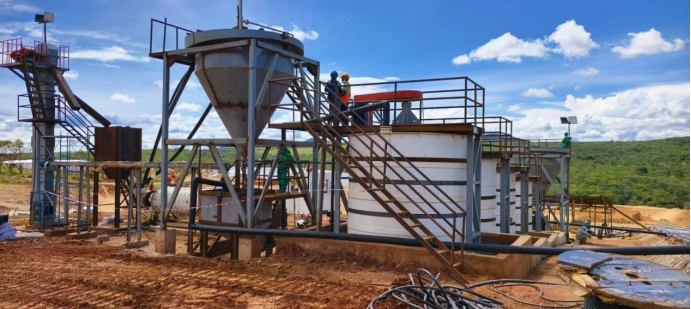
A smaller circuit can be easier to phase, supervise, and adapt when feed supply is uncertain. A copper concentrator with appropriately sized crushing, grinding, classification, flotation, thickening, and filtration may reduce the initial infrastructure boundary. Modular decisions can also help an owner test the ore route before committing to a larger expansion. These benefits depend on disciplined design; a small plant is not automatically simple.
How can a copper concentrator plant support staged development?
A copper concentrator plant can establish a practical separation route while leaving room for later additions. Buyers may plan space, utilities, pump duty, and sampling points for future capacity. The initial circuit should still have a complete mass-flow logic, because missing dewatering, concentrate storage, or tailings interfaces can turn a low-capital concept into an unreliable operation.
What Are the Main Technical Limitations of Small Copper Plants?
Why do scale and circulating loads matter?
Small equipment can be more sensitive to feed surges, wear, density changes, and unstable recycle loads. A ball mill or flotation cell operating outside the tested range can affect liberation and selectivity. Spare parts, maintenance access, water supply, and power quality may also have a larger effect when there is less redundancy. These constraints should be quantified during design.
Can a small circuit handle variable copper ore?
Copper mineralogy can change across benches or campaigns. Sulfide, oxide, and mixed material may require different grinding, reagent, or separation responses. A small plant may have fewer parallel lines and less room to blend feed. Sampling, stockpile planning, adjustable dosing, and a documented operating window help, but no circuit can remove geological variability without testwork and control.
Which Equipment Choices Shape Copper Beneficiation Results?
What does an industrial copper concentrate separation system include?
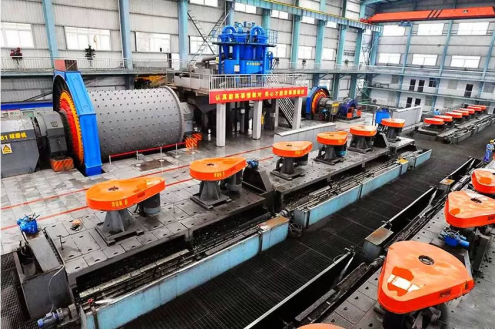
An industrial copper concentrate separation system normally links crushing, grinding, classification, flotation, thickening, filtration, and concentrate handling. The equipment should be selected as a circuit, not as isolated purchases. An Energy-Saving Ball Mill, Spiral Classifier, BF or SF/XJ Flotation Machine, Thickener, Disc Vacuum Filter, and Hydraulic Box Filter Press may each have a role when test results support the route.
Are automatic grading and conveying always required?
An automatic copper concentrate grading machine may be useful where the owner has a verified requirement for automated measurement, but a specific model or performance should not be assumed without a confirmed product source. A copper concentrate conveying system must account for moisture, cake behavior, transfer points, dust control, and maintenance. These interfaces often determine whether a small plant remains easy to operate.
How Should Buyers Compare Copper Concentrate and Downstream Routes?
Does every small plant need a copper electrolysis plant?
No. A flotation plant commonly produces copper concentrate for a downstream smelting route. A copper electrolysis plant belongs to an electrochemical refining or electrowinning context and requires a suitable anode or copper-bearing solution route. Buyers should define whether the project ends at copper concentrate, continues to cathode production, or uses another route.
What should a copper concentrate plant measure?
A copper concentrate plant should track feed grade, concentrate grade, recovery, moisture, particle size, penalty elements, water balance, and tailings quality. These indicators reveal whether the circuit is meeting its commercial purpose. If the owner is comparing copper gold forming techniques, the phrase should be clarified because mineral separation, alloy forming, and gold-associated copper recovery are different engineering questions.
What Does the Zambia Case Show About Small-Plant Planning?
How can Hongji Mine Machinery support copper beneficiation?
At Hongji Mine Machinery, we use beneficiation testing and process design to match equipment with ore behavior and target product. Our Jaw Crusher, Energy-Saving Ball Mill, Spiral Classifier, BF Flotation Machine, SF/XJ Flotation Machine, Thickener, Disc Vacuum Filter, and Hydraulic Box Filter Press can be evaluated as a connected copper beneficiation line. We do not treat a small plant as a scaled-down equipment catalogue; we define the interfaces, controls, water balance, and maintenance needs first.
What can buyers learn from the Zambia copper project?
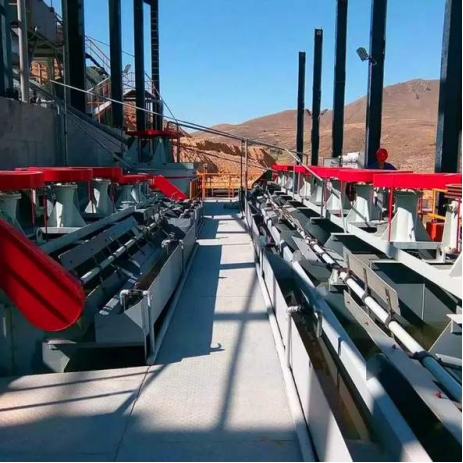
Our Zambia 2,000 t/d Copper Mineral Processing Plant case identifies copper ore and a route including crushing, screening, grinding, classification, flotation, and concentrate handling. The case is project-specific and does not establish a universal small-plant capacity or recovery guarantee. It shows why a buyer should confirm sample data, circuit boundary, dewatering, conveying, tailings, and expansion assumptions before selecting equipment.
For a small scale copper processing plant, these checks turn a compact concept into a controllable production system and make future decisions easier to audit.
That discipline is especially important when a small scale copper processing plant must operate with limited spare capacity and a narrow maintenance window.
At Hongji Mine Machinery, we can also help buyers separate confirmed process requirements from optional automation or future expansion items. This keeps the initial small-plant scope focused while preserving the information needed for later debottlenecking.
FAQ
Q: Is a small scale copper processing plant cheaper to operate?
A: Not necessarily. A smaller initial investment often looks very appealing at first. However, your actual unit expenses can still go up. This usually happens if the facility lacks proper backup systems. It also occurs during periods of low equipment use, tough transport conditions, or an unsteady material supply. Any true cost review must look at several daily factors. You need to carefully evaluate power usage, routine upkeep, and worker wages. Furthermore, always remember to account for water needs, basic operating supplies, and the final concentrate handling.
Q: What is a copper concentrator plant used for?
A: It separates valuable copper minerals from gangue through stages such as crushing, grinding, classification, flotation or gravity separation, thickening, and filtration. The product is usually a copper concentrate rather than finished cathode metal.
Q: Can a small copper plant be expanded later?
A: Expansion is possible when the initial layout, utilities, foundations, pumping, sampling, and material-handling interfaces are planned for additional capacity. The expansion should still be checked against future ore characteristics and new testwork.